We left you on the way to Hanfield Bay, BC in July. I promise you, we did not sink Arcturos along the way. We had a wonderful trip home from there. Perhaps I will remember it here one day.
We did move Arcturos though, from Blaine to Everett, over a year ago. We were up early, leaving in the dark on a freezing but calm March morning in order to make it through Deception Pass at slack tide. A quiet, peaceful morning awoke as the sun rose over calm waters
Bailey was very happy on the bow.
We made it south through Deception pass, worked our way into Saratoga Passage and started thinking about where to stay for the night. Little did we know that all the marinas along the way were just closing due to COVID-19 that weekend. One after another we called, no docking allowed. At least we had a beautiful, calm day to arrive at our new home at the North Everett Marina. I recall we made the trip in under 12 hours, arriving around 6 PM tired but, happy for a lovely day.
One of the fun challenges about boating up the Inside Passage are the narrows and rapids. With the wide swings in tides and currents, deceptively peaceful channels transition to impassable torrents of whirlpools, eddies and overfalls in the space of an hour. The current can run from 1 or 2 knots at slack water up to 15 or more knots 3 hours later at maximum current. Multiple factors influence how fast the water moves: the moon, the tides, the wind, the weather, the geography etc. Of course, the safest time to pass through these narrow channels is at slack water which happens about every 6 hours. Even speed boats need be wary but, when you have a slow boat like a trawler or sailboat, it is essential to pass through at slack tide or within 30 minutes of same for most passes.
Motor boats have 2 main kinds of hulls: displacement hulls and planing hulls. Displacement hulls displace the water through which they move. Planing hulls ride up above the water once up to cruising speed. The advantage of a boat with a displacement hull is the fuel efficiency. The disadvantage? It is slow. Arcturos has a displacement hull. 10 knots is pushing the engines as hard as they can go, spewing black smoke. Its sweet spot for fuel efficiency is 7-7.5 knots. Some sailboats can pass us in a good wind. I think you can understand why, for a slow boat, moving with or against even a 3-5 knot current in a place with whirlpools, could be difficult and dangerous.
Our goal this day is to get at least to Cordova Cove which is a small group of islands in Cordova channel just past the Greene Point rapids. About 30 minutes after leaving Douglas Bay, we will need to pass through Whirlpool rapids. Slack water at the rapids is not at exactly the same time. Fortunately, Greene Point turns slack after Whirlpool but, not much after. For us, it will take about an hour to get from one to the other. In our favor, is that we are two days from the Neap tide, when we have a 1/2 moon and the difference in the high and low tides is the least. We get up early so that we can get through Whirlpool rapids 20-30 minutes before slack water which should get us to Green Point rapids about 30-45 minutes after slack. No problems. Kind of fun! We arrive at Cordova Cove by 9 am. Beautiful but, not much to do other than watch boats come through the rapids so we move on towards Hanfield Bay which is positioned fairly close to Seymour narrows which we can pass the following day. Sorry not to have any exciting pictures of rapids for you. Someday we will sit above some rapid on land and watch as it turns wicked.
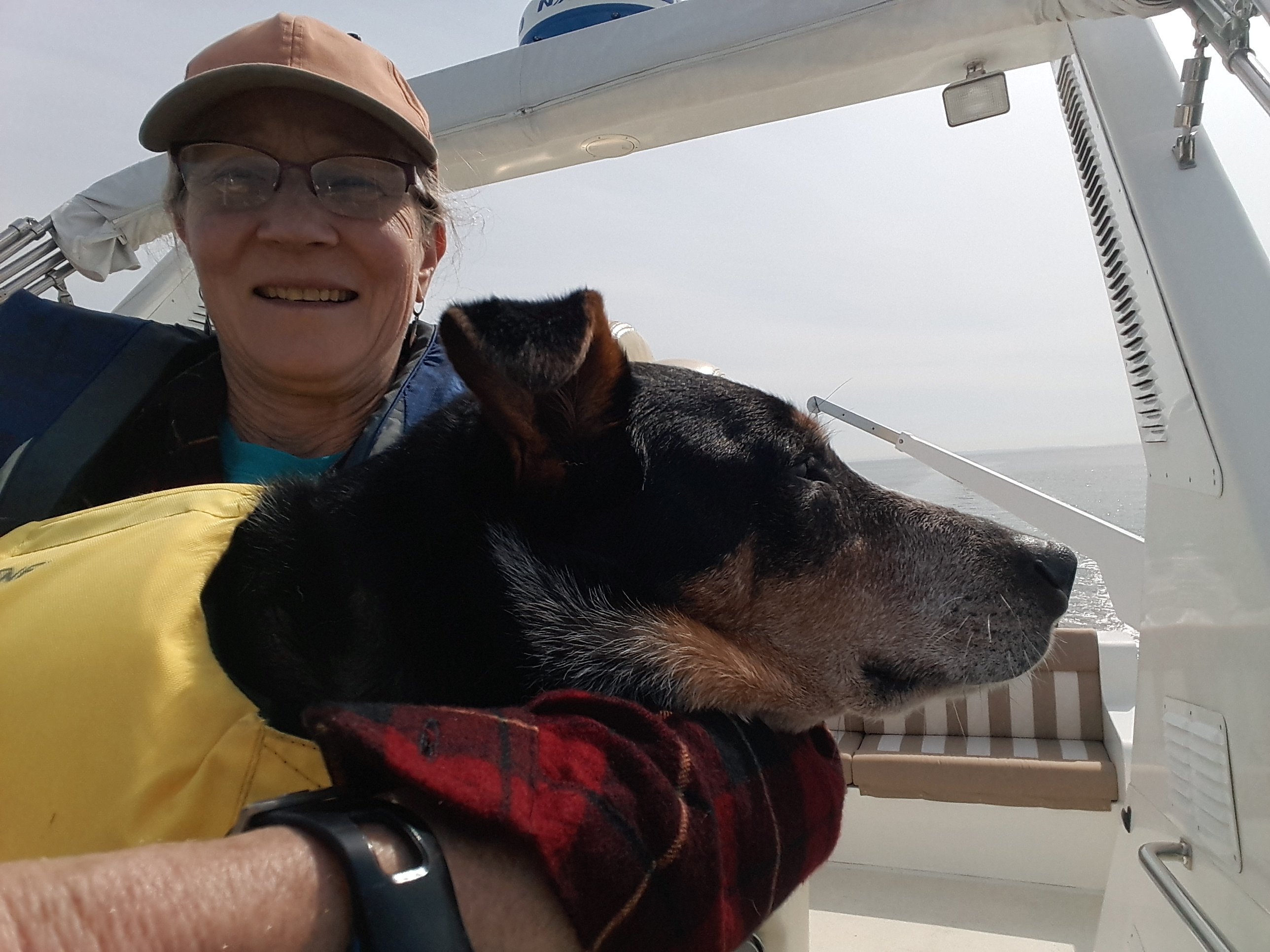
Bailey doesn’t really like it when Arcturos is moving but, he loves riding in the tender, up in the bow nose to the wind, ears flying. We store the tender aft on the fly bridge and have a crane that lifts the tender up, swings it over the water and slowly lowers it into the water. Bailey always likes to help. Any time Pat goes up on the fly bridge, he has a little shadow. At Small Bay, Pat decided to let the dog ride down to the water in the tender. Bailey jumped right in and up he went. Pat swung the tender over the water….well almost over the water. The cable broke, the bow hit the corner of the awning and the tender dropped, engine 1st, vertically into the drink. Bailey hasn’t given us his version of the incident but, when Pat next saw him, he was swimming for shore. As soon as he could stand up, he turned around, and refused to swim anywhere near either the boat or his people. Fortunately, I was down getting my wetsuit on for a swim and ran up with all the commotion, just in time to get to swim after the tender which had, also fortunately, landed intact and upright. Bailey then swam back and forth, to boat, to shore and back a couple times before he finally agreed to climb up my legs to get back on Arcturos and, we think, forgive us.
You can see the crane in the background just above Bailey’s nose
Pat was ready to start heading home after one more night. That made me sad but, vacations can’t last forever! We left Helmckyn island for Port Neville. It sounded good and was just a bit farther north. We got as far as Robber’s Roost in this long shallow inlet when the depth gauge read 8 feet and dropping. Despite slowing and turning as quickly as Patrick could, the depth gauge dropped to 2.8 feet. Arcturos has a 5 foot draft. It must have been light mud and muck at the bottom because the boat just kept going into deeper waters. Whew! The biting flies and logging views were what turned us around though. There was not much here to inspire. So since it was early, we picked another destination and headed South to Douglas Bay near Forward Harbour.
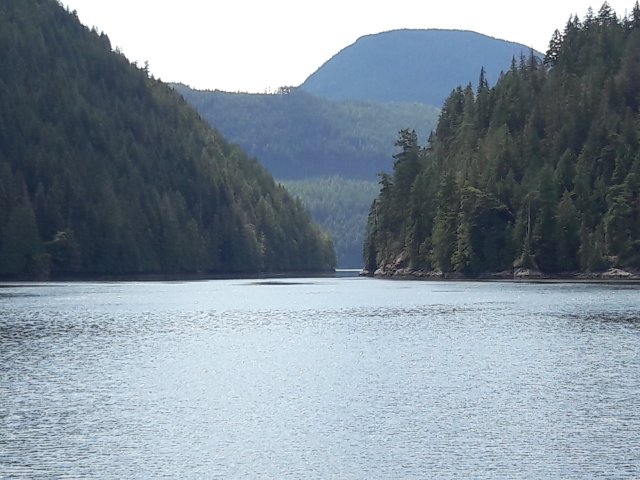
The view from our anchorage, Douglas Bay, looking towards Forward Harbour at the end of the channel
We found many boats in Douglas Bay but, there was plenty of room next to the channel. Douglas Bay is near the entrance and is very close to Whirlpool Narrows, a handy spot to wait for the slack tide in order to pass through. Bailey and I went ashore in the kayak and found no one else on the beach despite at least 20 boats at anchor. It was a nice gravel beach with a trail that led 10 minutes across the peninsula to another empty beach only this one was very shallow and in between the rocky parts of the beach was white sand! Shallow=Warm! Bailey and I have a game we both love. I throw sticks far into the water. We race to see who can get to it 1st. He is a happy dog when on land and doesn’t usually like to swim, unless there is a ball or stick involved or when he just has to as you will see in our next installment.
The entrance to Forward Harbour/Douglas Bay. We were impressed at the narrow pass and how steeply the cliffs rise from the water here.
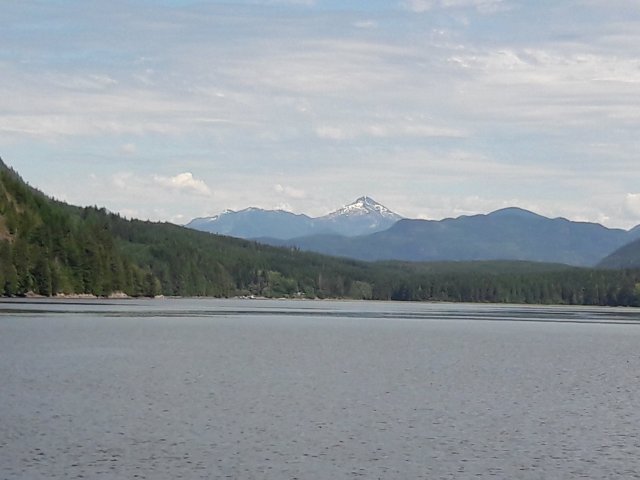
Leaving Small Inlet, Pat wants a place with cell phone coverage in order to download an equipment manual. The hydraulic stearing is working but auto pilot is still dysfunctional and confused. It thinks the date is January 1st, 2014. We picked a lovely island in the middle of Johnstone Strait. Small and only logging roads to hike but, was fun exploring the shores from the kayak and it had a view of Mount Waddington which Pat had attempted to climb years ago.
I don’t want to make it sound like this is all a piece of cake. If you own a boat you expect things to go wrong. That is part of the fun, figuring it all out. And sometimes it is not so fun and you feel really really dumb and it can be very humbling when you make mistakes. So here is my biggest scariest mistake.
First, you need to know a bit about anchoring. Gorge Harbour is a large bay with a busy resort on one cove, the docks and mooring buoys full and many boats at anchor. Finding a place to anchor is a challenge. You need enough room to swing on the anchor without hitting other boats and objects, enough anchor chain or rode to keep the anchor set and a way to get the anchor down and up. We have 275 feet of heavy chain connected to our 130 # anchor. Too heavy to pull up and down by hand, it requires a windlass, an electric/hydraulic winch. I will try to explain how this works so bear with me. We have two anchors. We only need to use one of them in most situations. Each anchor has a chain locker. The chain comes up from the locker, wraps over its own “gypsy”, a cylinder with grooves into which the chain links fall when the gypsy is turned by the windlass motor. Then the chain attaches to the anchor which sits at the bow of the boat. Since we don’t want to lower both anchors at the same time, the gypsies have clutches that tighten or loosen so that you can choose which gypsy the motor of the windlass will turn, pulling the chosen anchor into or out of the locker.
At Gorge Harbour, the water is deep enough, we needed to use almost all of the anchor chain. After lowering the anchor once, Pat decided we were drifting too close to another boat. So I raised the anchor and we moved a bit further away. When I started lowering the anchor again, it suddenly started dropping super fast, the chain charging into the water with no control. If Pat had not acted so fast, we would have lost the anchor and probably damaged the boat. He 1st tried to stop it with his foot and was lucky he didn’t lose his foot or worse. He then quickly tighten the clutch on the windlass and was able to stop the chain just before it was about to run out. My mistake, which will never be repeated, was not tightening the clutch before starting to lower the anchor in the 1st place. My only consolation is that I am not the 1st person to make this mistake. Google “runaway anchor” to see a great example of a navy ship losing it’s chain and anchor on a much larger scale.
Here is a list of a few other problems we had to address during the trip:
The hydraulics to the steering systems. This required a 2 day stop in Campbell River to visit a ship mechanic.
The autopilot. Patrick was busy texting and calling the electronics companies and the electronics specialist that installed our new navigation system to try to get this fixed. It is better but, still a work in progress.
The batteries. The batteries on a 15 year old boat age even though the boat hasn’t been used. They are old and tired are not charging completely. We will probably need to replace them next year. Meanwhile, the generator was needed to recharge them enough to keep the refrigerator/freezer running (and all the rest of the electrical needs: water and head pumps, navigation electronics, windlass, lights, microwave, starter motor, tender crane, etc. etc. etc)
The water and other pumps. Bailey likes to chew on sticks but, rotting logs are his favorite. One day, I flushed the dog’s poop which looked a bit like beauty bark that day. Pat has better ears than I and pointed out that the head pump was running continuously and at risk for burning out. Beauty bark was not meant to go down the head!
The crane that lifts the dinghy down to the water from the fly bridge. This is another long scary story that will have to wait for another day.
The last issue I can think of is that Bailey has anxiety when the boat is moving. He has found a way to stop the boat. To be continued.
Bailey trying to hide under the captain’s chair. Sometimes he tries to squeeze in behind the wheel.
We left Campbell River at 5:15 am to make an early slack tide at Seymour Narrows. 8 miles past the Narrows, Small Inlet beckoned from the end of Kanish Bay. Such a lovely, secluded spot, we stayed for 2 days.
Lake Newton, is a 1+ mile hike from Small Inlet or Waiatt Bay, with refreshing “warm” water swimming down a rock scramble. Even Bailey went in after a stick.
One can also hike the portage to Waiatt Bay which is on the opposite side of Quadra island and much more crowded. (All the white dots are distant boats at anchor.)
Steering sloppy, especially on fly bridge, and auto pilot not working since before Gorge Harbour. Arranged for moorage and a mechanic at Campbell River’s Discovery Harbour Marina. Stayed an extra day as a storm blew 20 knot winds and rain.
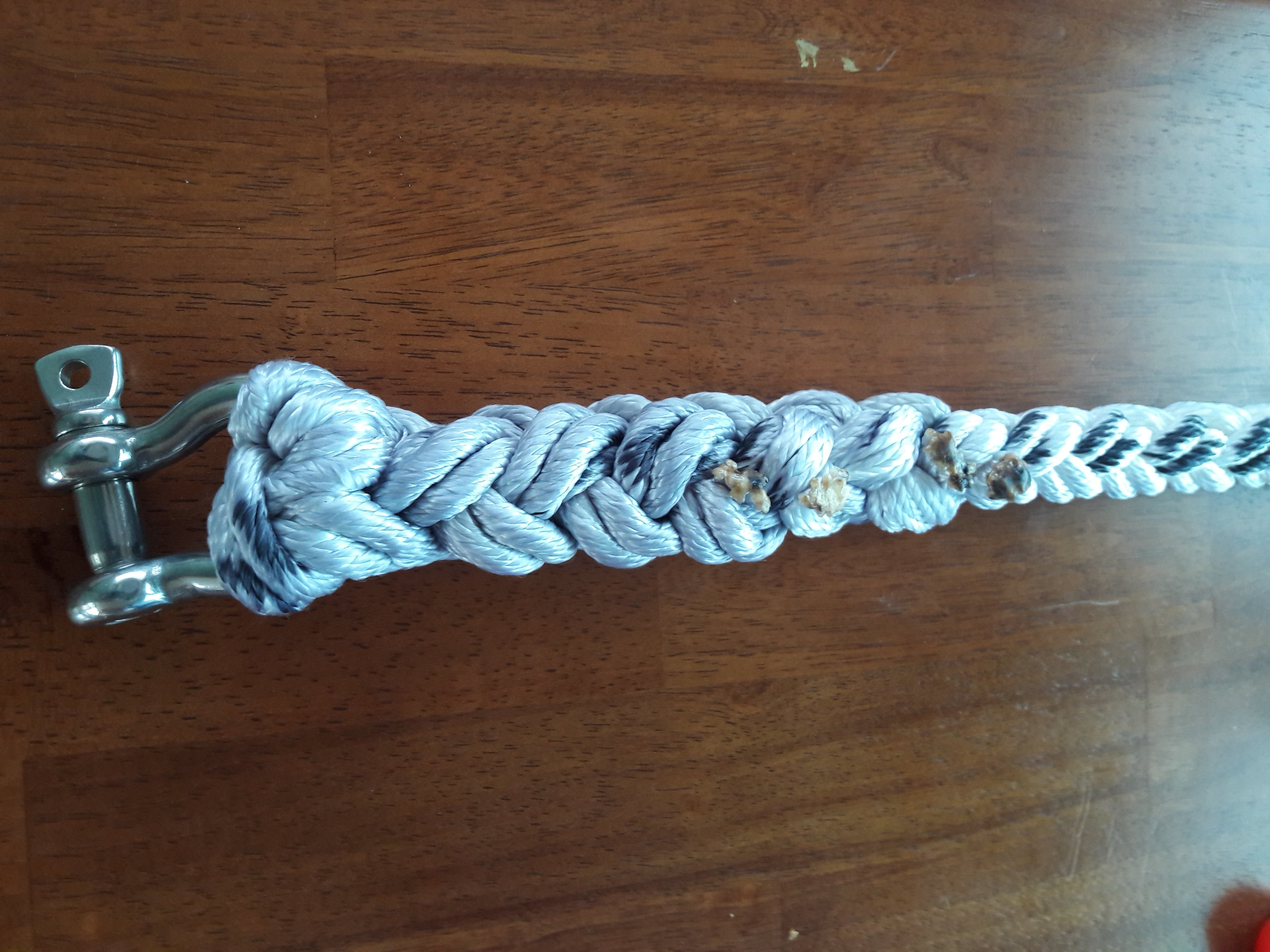
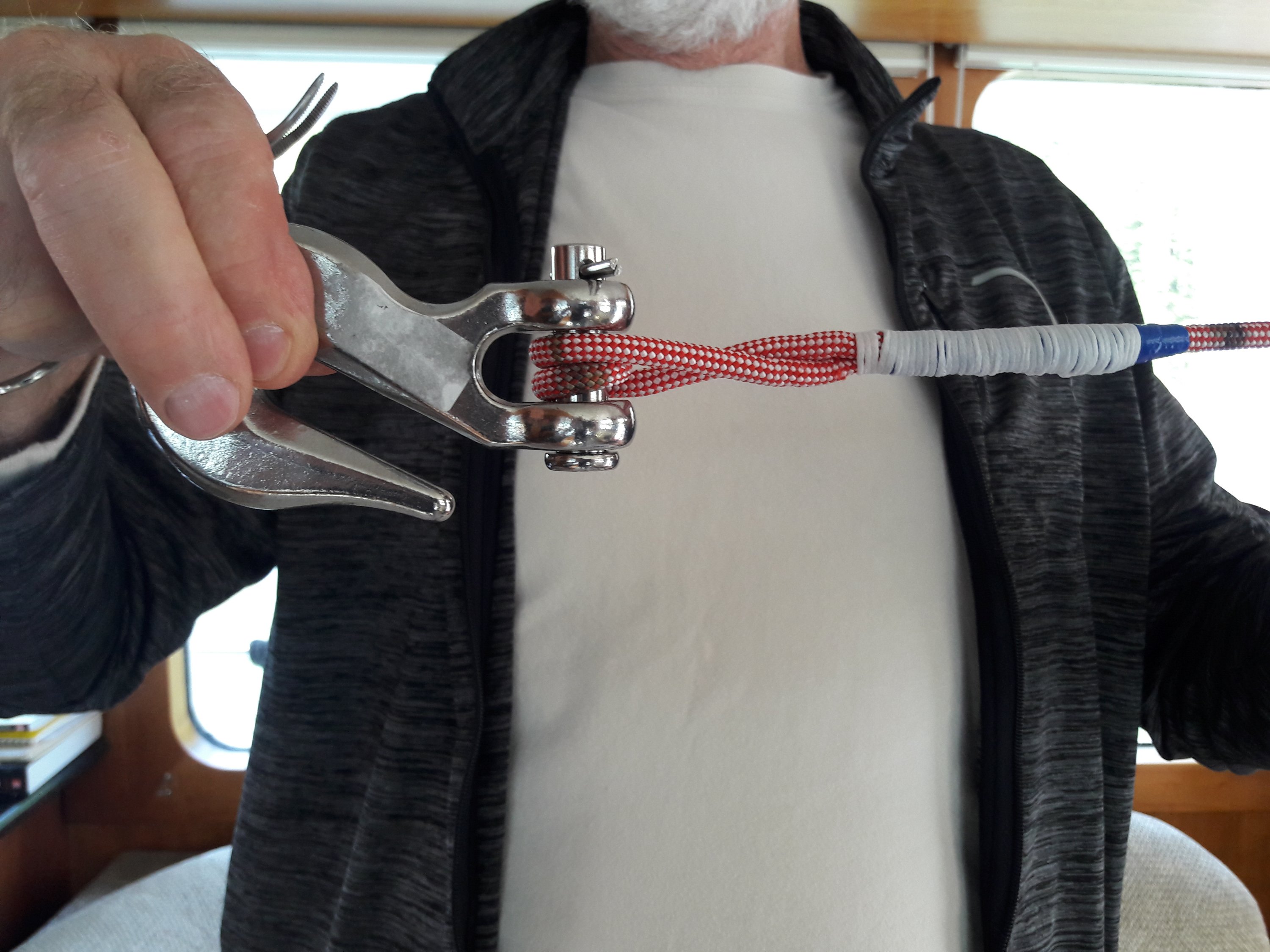
This allowed time to splice the rode to a shackle and the anchor chain, mark the rode and get it all back in the anchor locker before moving on.
Finished eye splice in Dyneema line, super strong double stranded, super hard to splice! Why did I pick this as 1st splicing project?!
This long spit on Quadra Island creates a superb bay for anchoring, kayaking, camping, walking, beach combing and swimming. Water temp 67 degrees. I wore a wet suit anyway.
Trails on each side of the spit afford a variety of views. Whales and otters outside, yachts, boats and splashing children inside.
Eager to take advantage of calm waters, we departed Nanaimo at 6 am aiming for Desolation Sound, a long day. Hydraulics issues are affecting steering from the fly bridge and autopilot but, the water is calm all day.We decide to head to Gorge Harbour on Cortez Island. About 3 hours out, Pat spots a whale. An hour or so later we get a show of slapping fins from 2 humpbacks and a few views of, we think, transient Orca. Sorry no pics!
Pics below
1.View from Nanaimo moorage. Many kayaks, dragon canoes and boats paraded by.
2. Calm waters leaving Nanaimo.
3. Entrance to Gorge Harbour
4. Family of adolescent geese hoping for a hand out.


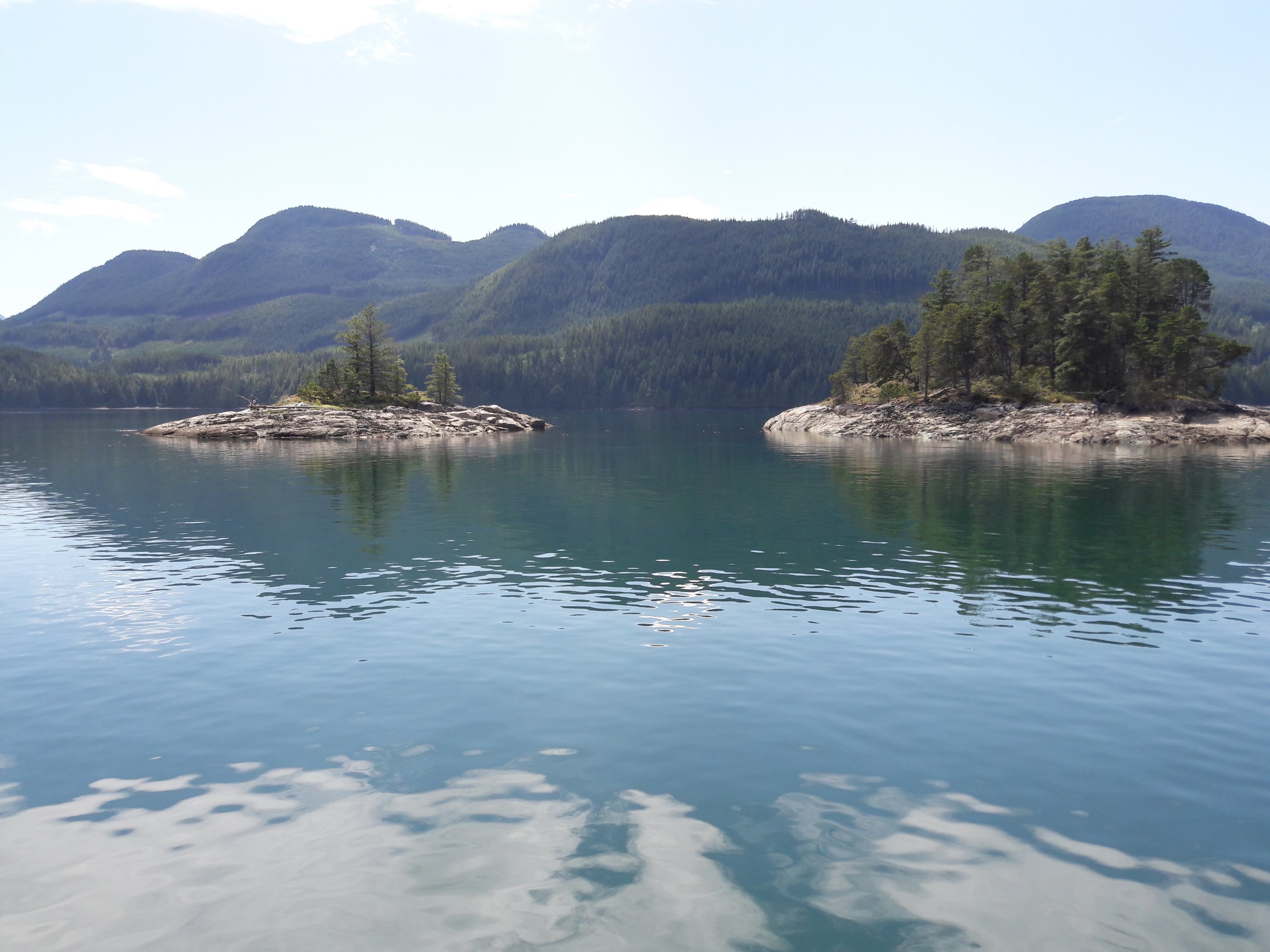
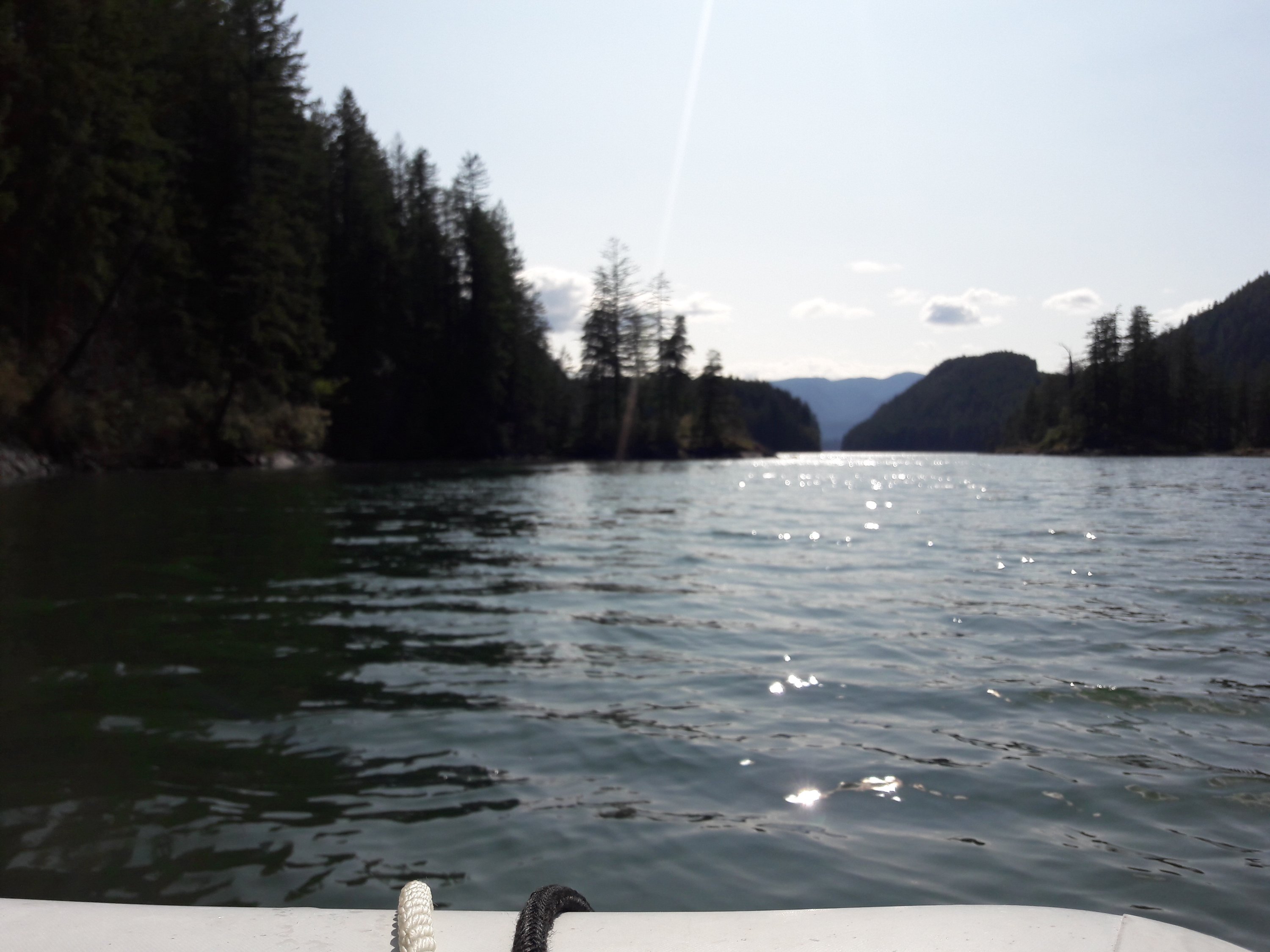
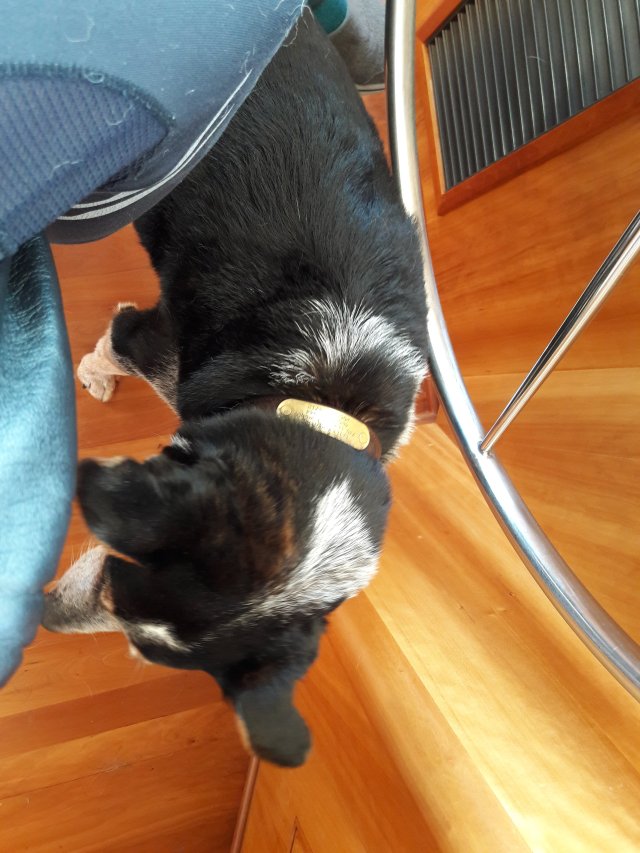
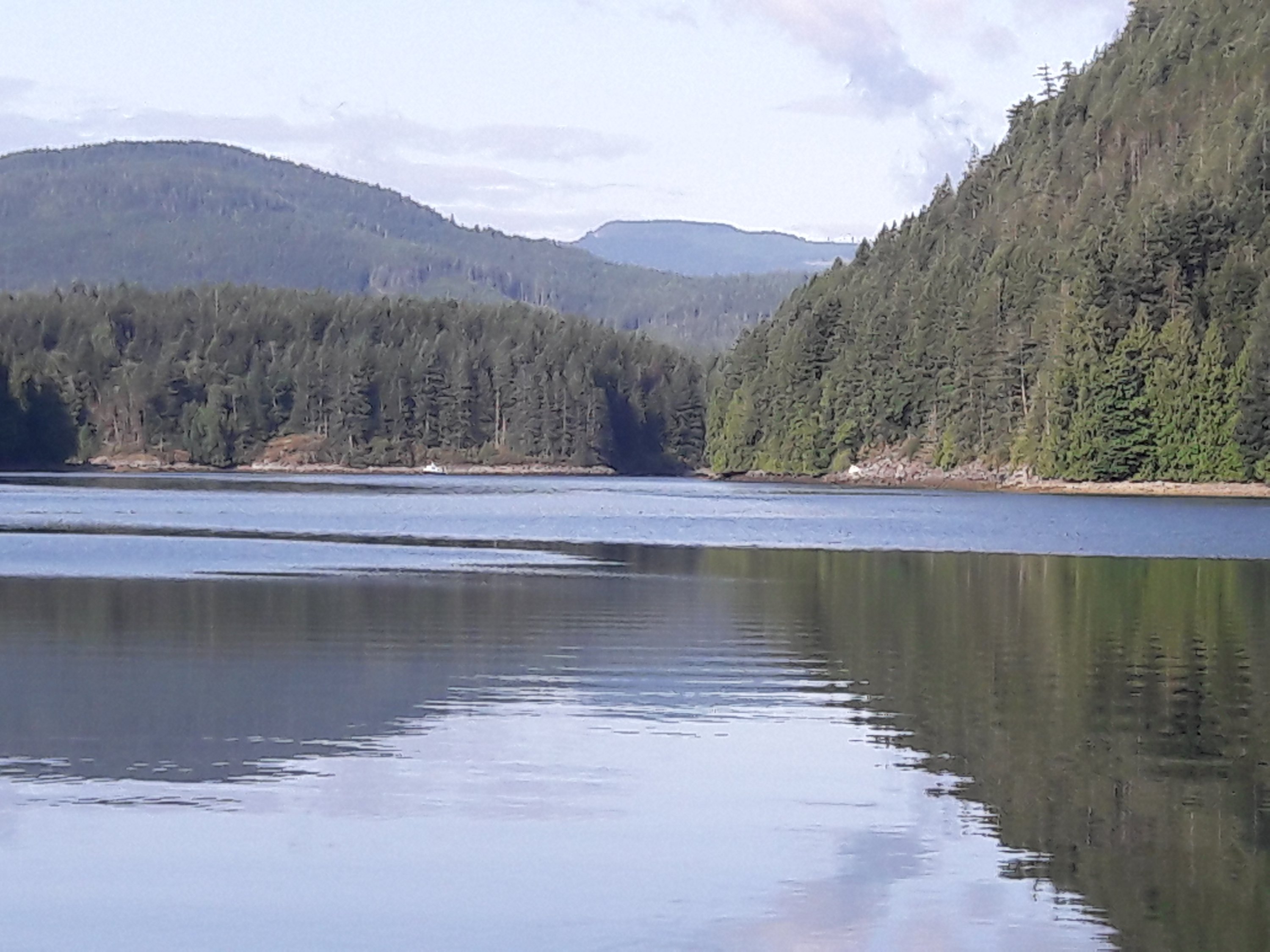
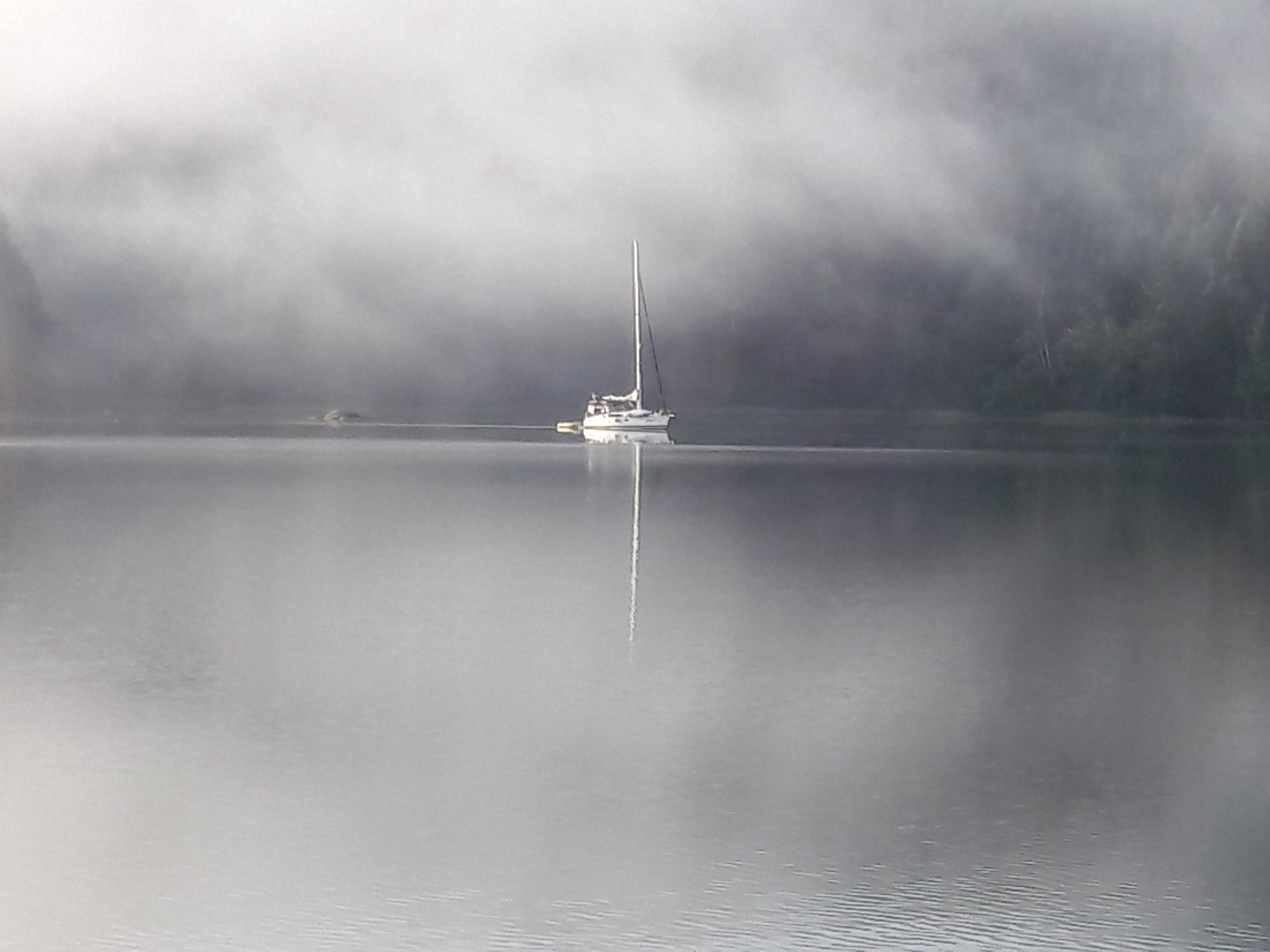
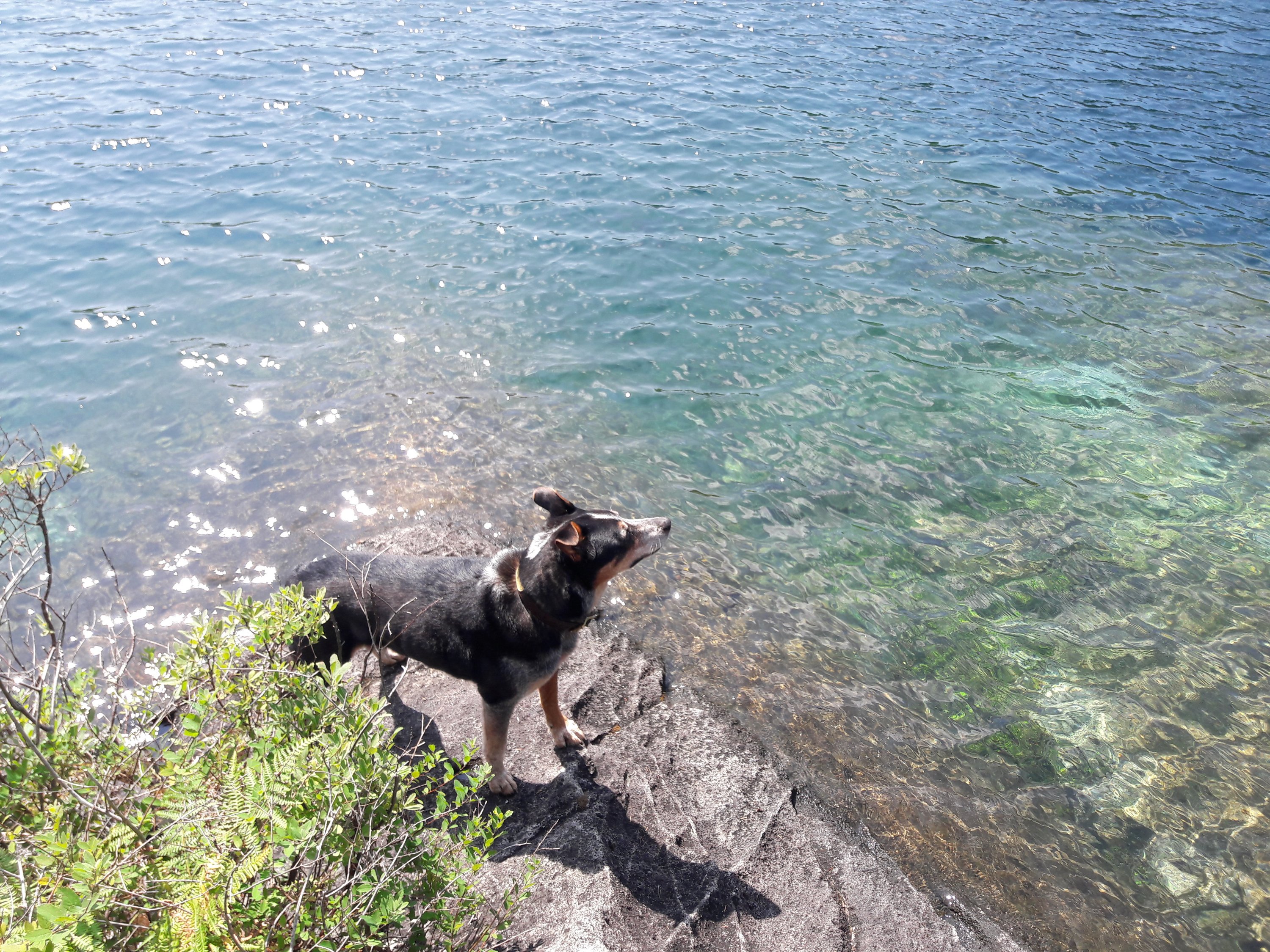
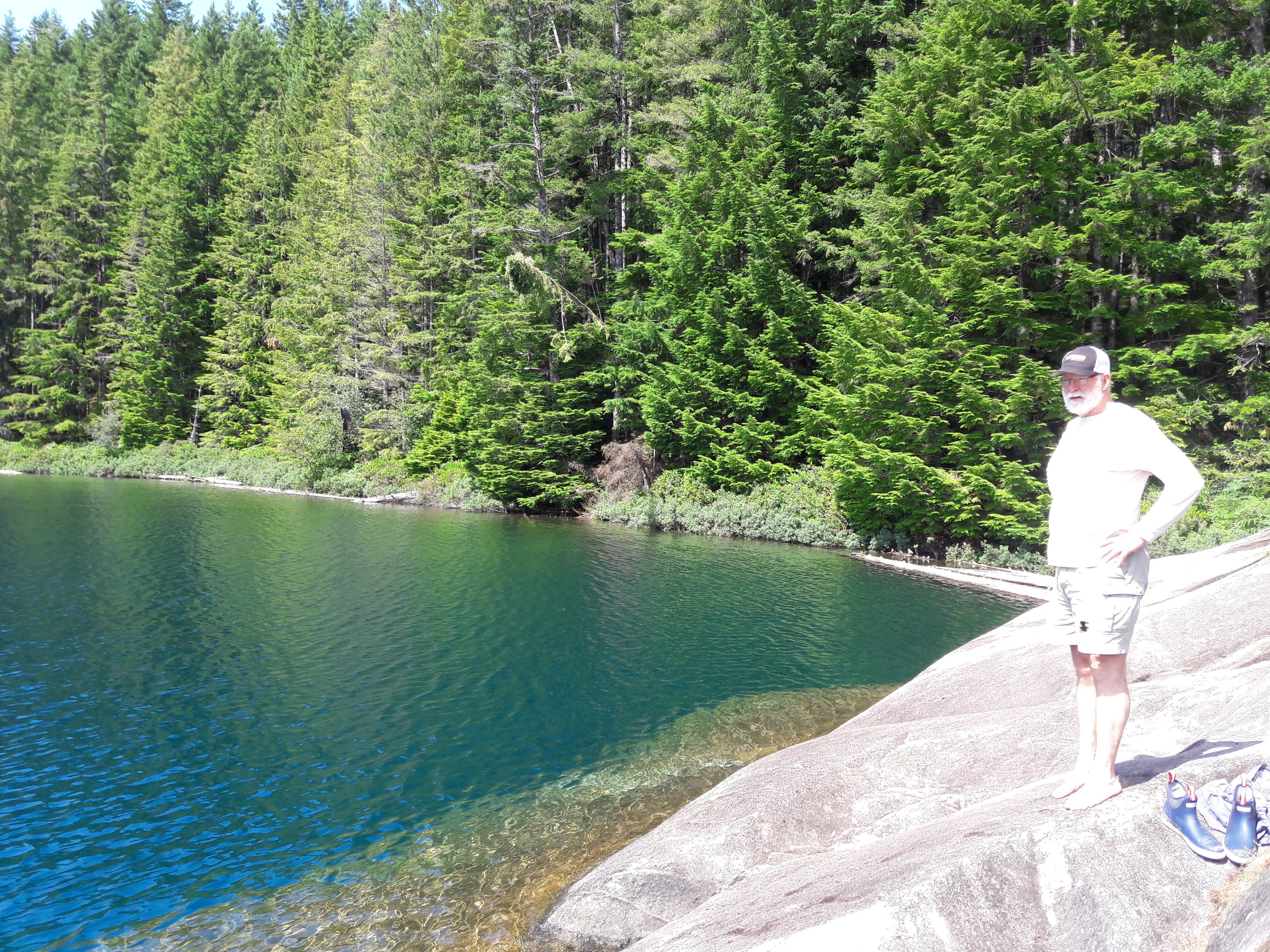
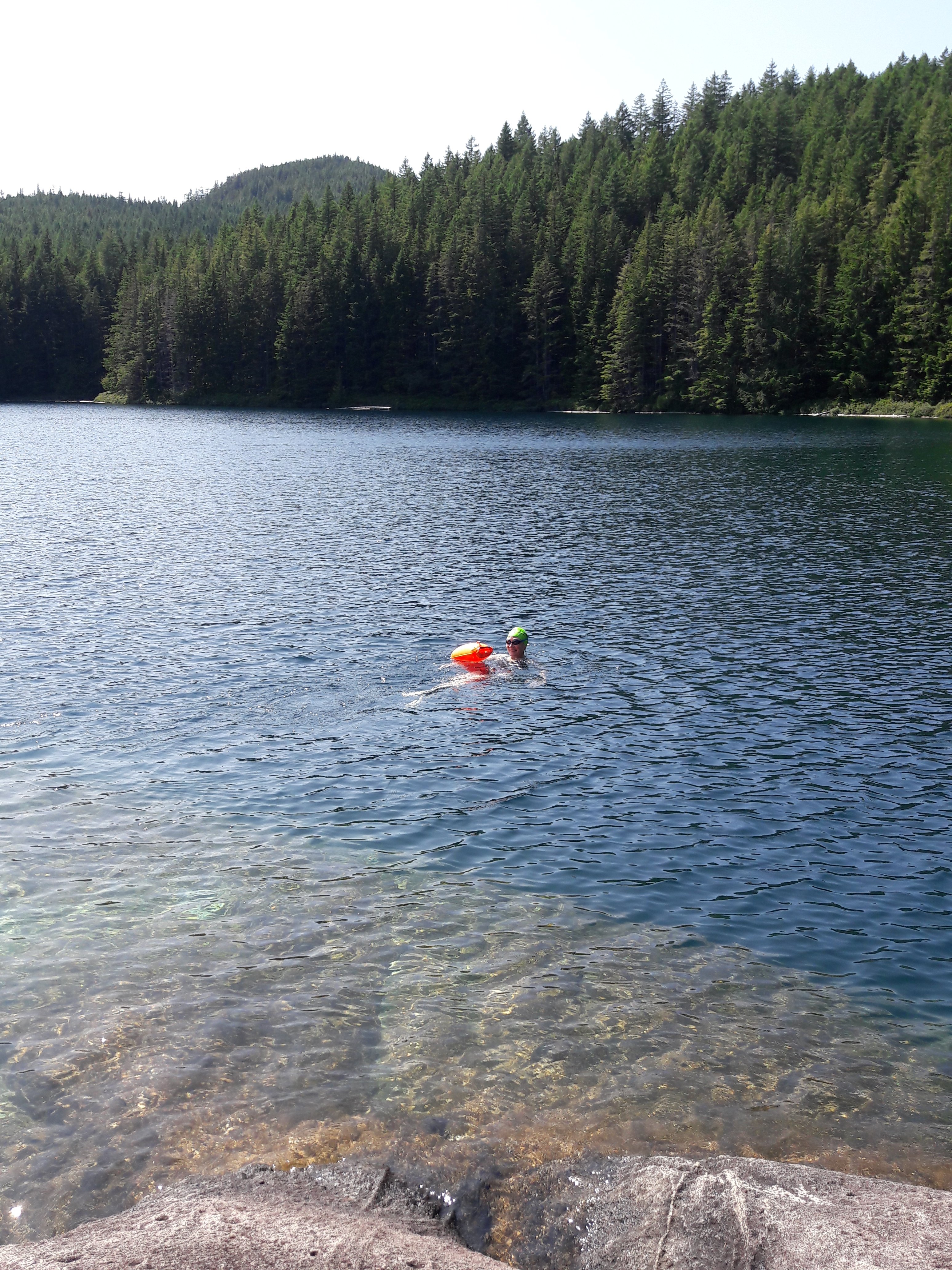
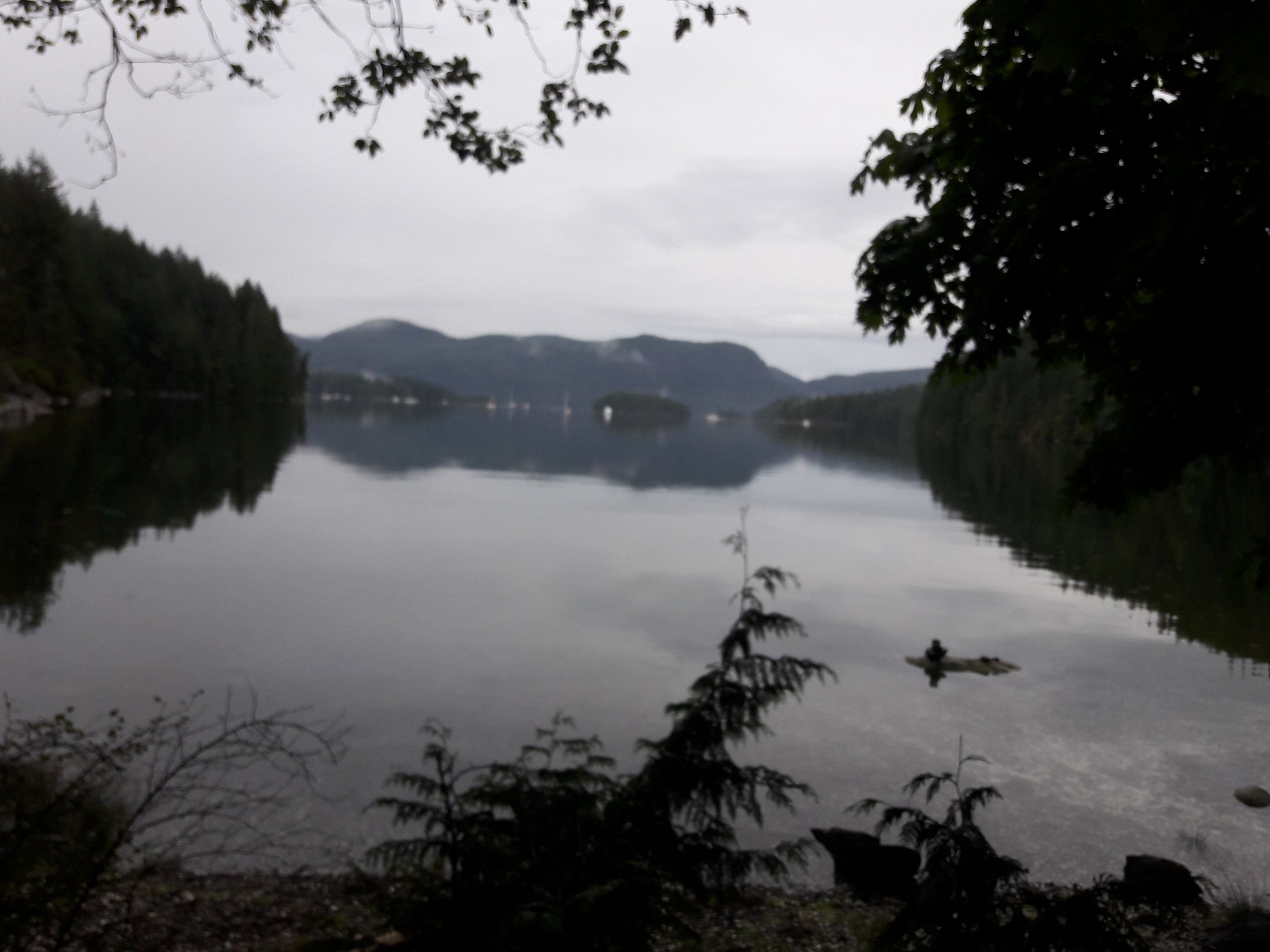

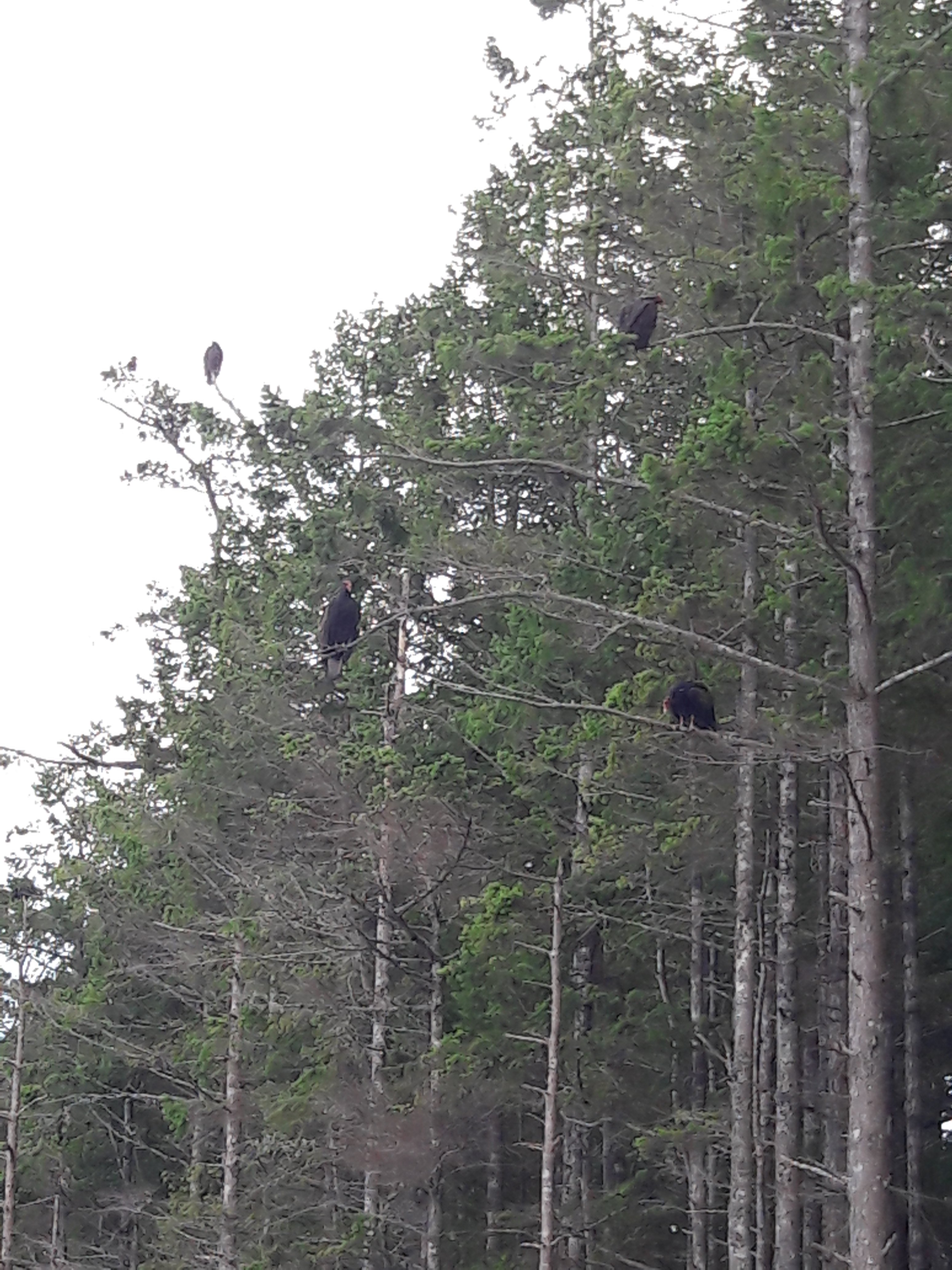
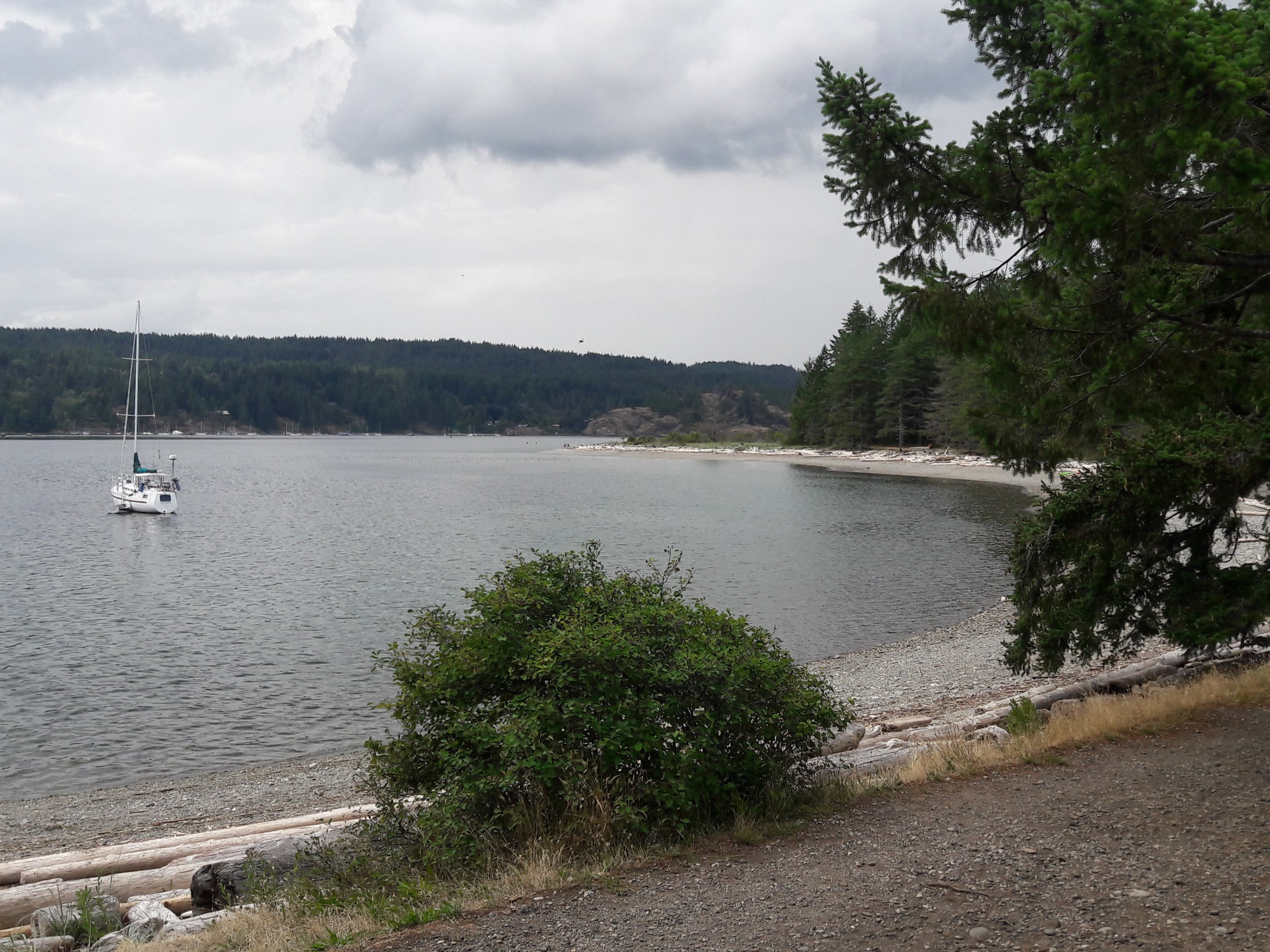 Inner Rebecca Spit.


 Holeinthewater